
Which is the best Vertical Tower Sand Plant?
In the field of tower-type sand making plants, with profound technological accumulation, full industrial chain capabilities and mature project cases, GME Group firmly ranks in the top tier of the industry. Its VU tower dry sand making system serves as a benchmark product dominating the market.
Core Advantages of VU Tower Sand Making Plant
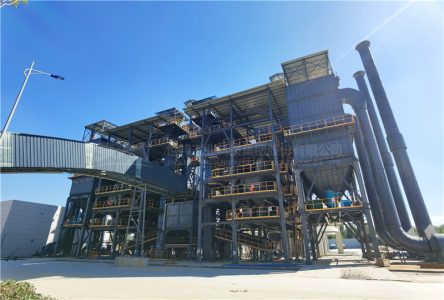
1. Intensive Tower Design, Small Footprint & High Efficiency
Adopting a modular steel structure three-dimensional layout, the main body covers only about 400 square meters, saving 70% land occupation compared with traditional flat production lines. The whole process adopts fully enclosed vertical operation; materials flow downwards by gravity, cutting down conveying equipment and energy consumption, with unit power consumption per ton greatly lower than that of traditional processes.
2. Core Sand Making Technology, Premium Finished Product Quality
Equipped with the dedicated VSI6X impact crusher for sand making and shaping, it integrates rock-on-rock grinding and cascading shaping technology. The manufactured sand features rounded particle shape and continuous gradation, with a fineness modulus of 2.6–3.0 and adjustable powder content of 3%–15%.
3. Fully Enclosed Dry Production, Eco-friendly & Zero Emission
It adopts an integrated design of fully enclosed conveying, negative pressure dust removal and pulse powder collection. The production process generates no sewage, sludge or fugitive dust, meeting national environmental protection and dual-carbon goals. Recycled stone powder realizes waste-to-value conversion and improves overall economic benefits.
4. Intelligent Central Control & Reliable Configuration, Low Operation and Maintenance Cost
Equipped with a full-automatic intelligent control system, it centrally monitors equipment operation, temperature, flow rate and product quality, supporting remote control and fault early warning to reduce labor input. Key components adopt high-strength alloy and wear-resistant materials, extending the service life of wearing parts by over 30% and reducing downtime and maintenance frequency.
5. Wide Adaptability & Versatile Application Scenarios
Its processing capacity ranges from 60 to 300 tons per hour. It can process various materials such as granite, basalt, limestone and river pebbles, and is widely applied in mixing stations, dry-mixed mortar, cement products, large-scale infrastructure and other fields. It can recycle mine tailings, construction waste and other solid wastes to realize resource regeneration with a short investment payback period.
- Which Crusher is Best for Processing Aggregates?
- What equipment is used for basalt gravel production?
- What equipment is used for producing coarse sand?
- What are the types of granite sand making machines?
- How much does a sand making production plant cost?
- What are the differences between an impact crusher and a cone crusher?