
Process Design of Sand and Aggregate Production Plant
For soft rock sand making, jaw crushers or impact crushers are usually used for primary crushing. Materials are then sent by belt conveyors to impact crushers for secondary crushing, followed by screening with vibrating screens. Oversized materials are returned to the impact crushers for re-crushing, while qualified materials go to finished product bins. The process design of sand and aggregate production lines for soft rock sand making must strictly follow green and environmental protection standards. Closed plant design can be adopted to reduce dust and noise pollution. Dry production processes need dust removal equipment, and wet processes require sewage treatment systems.
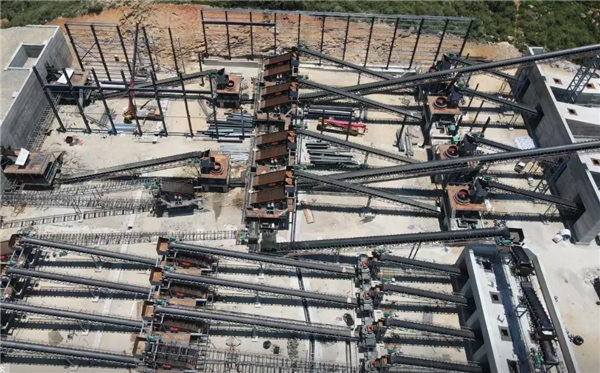
Although hard rock sand making is effective, it is essential to choose the right equipment and process. How should the process of a hard rock sand and aggregate production line be designed?
A three-stage crushing and sand-making process is recommended. For primary crushing, jaw crushers or gyratory crushers can be selected based on material properties and production requirements. After primary crushing, materials are transported by belt conveyors to secondary and tertiary crushing stages equipped with hydraulic cone crushers, which are more suitable for medium and fine crushing of hard rocks.
After screening, materials enter the sand-making and shaping stage equipped with vertical shaft impact crushers. Once screened again, qualified manufactured sand is transported to finished product bins for engineering construction. The process design of hard rock sand and aggregate production lines should also meet green and environmental protection production requirements.
- How to configure a 300 TPH sand production line?
- What are the types of granite sand making machines?
- What are the differences between an impact crusher and a cone crusher?
- 300 TPH Pebble Stone Crushing Plant Process Flow
- Complete stone crushing plant equipment & price
- How to Choose the Right Sand Making Equipment for Small Sand Plants?