
Why does the stone crusher vibrate heavily?
Severe machine vibration during the operation of a stone crusher is a common fault in mine crushing production lines. It not only speeds up wear on equipment parts and shortens the whole machine’s service life, but also causes foundation cracks, resonance and abnormal noise of surrounding equipment. It may even bring potential safety hazards and disrupt the normal continuous operation of the production line. Excessive vibration of the stone crusher is mainly caused by problems with installation foundation, machine parts, material working conditions, transmission system and daily maintenance.
Unqualified equipment installation and foundation are the top cause of frequent vibration. If the foundation is not poured with enough strength, the ground is uneven, shock-absorbing pads are not installed, or the shock-absorbing rubber is aged, cracked or fallen off, the machine cannot buffer impact force during operation, resulting in high-frequency vibration. Meanwhile, loose, missing or unevenly tightened anchor bolts will make the machine poorly fixed to the foundation. The impact force during crushing makes the machine shake side to side and jolt up and down, making the vibration even stronger.
Unbalanced key crushing parts like the rotor and hammer heads can also lead to violent vibration. After long-term operation, uneven wear of crusher hammers and liners, or broken and fallen-off individual hammers will shift the rotor’s center of gravity and cause unbalanced centrifugal force during high-speed rotation. In addition, if a large amount of stone powder and dirt builds up inside the rotor and is not cleaned in time, the dynamic balance will be broken, causing obvious shaking and vibration of the whole machine.
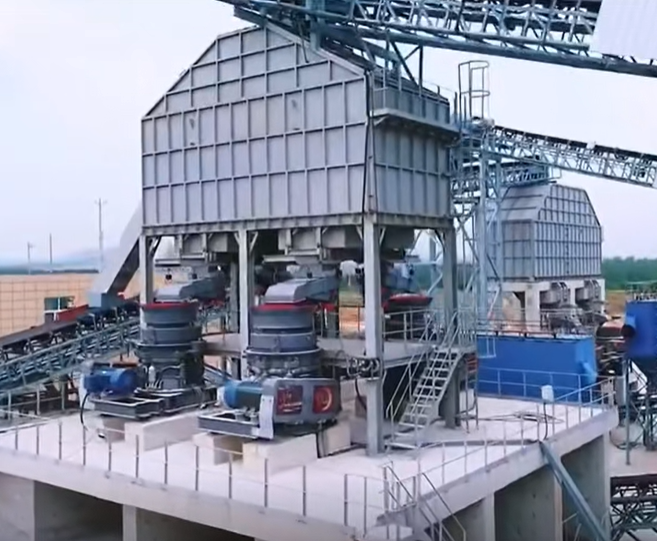
Faults in the transmission system are also a key factor that cannot be ignored. Excessive misalignment of pulleys and couplings, uneven belt tightness, and aged and stretched V-belts will cause uneven transmission force and periodic vibration during operation. Worn bearings with excessive clearance, lack of lubricating oil, or loose bearing seats will lead to radial runout of the rotating shaft, triggering resonance of the whole machine, often accompanied by abnormal noise and overheating.
Abnormal feeding and material conditions will also worsen vibration. Oversized feeding materials and large stones entering the crushing chamber directly exceed the machine’s rated crushing load, causing material jamming and sudden shutdown, and triggering severe vibration from instant impact. Uneven feeding with unstable material volume makes the equipment load fluctuate up and down and reduces running stability. If uncrushable foreign objects such as iron blocks and steel bars are mixed in the materials, the crushing chamber will bear sudden excessive force, producing strong impact vibration and easily damaging machine parts.
Aging and deformation of the frame and wearing parts can also cause vibration. Cracks at the welding joints of the machine frame, deformed machine shell, and loose or displaced liners and impact plates will unbalance the force structure during crushing. Long-term overloaded operation reduces the rigidity and impact resistance of the frame, making operating vibration gradually more serious.
Poor daily maintenance will turn minor hidden troubles into major faults. Failure to regularly check and fasten bolts, replace worn parts, clean accumulated dust and dirt inside the machine, or perform timely lubrication will lead to abnormal fitting clearance of all parts, poor running stability, and increasingly serious vibration problems.
- Which Crusher is Best for Processing Aggregates?
- How to configure a 300 TPH sand production line?
- What equipment is used for basalt gravel production?
- Which is better for sand making: impact crusher or cone crusher?
- What are the complete stone crushing plant equipments?How much is a complete crushing production line?
- How much does a sand making production plant cost?