
Why select cone crushers for secondary and fine crushing?
In sand and aggregate as well as ore processing production lines, jaw crushers are mostly adopted for primary crushing, while cone crushers stand as the preferred choice for secondary and fine crushing. This selection is determined jointly by equipment structural principles, crushing performance, production efficiency and overall operation costs, and has become the mainstream configuration solution for modern large-scale aggregate production lines.
In terms of crushing principles, cone crushers adopt the laminated crushing mode. Materials are squeezed by the swinging moving cone and fractured along texture cracks under multi-directional force. Compared with impact crushing of impact crushers, laminated crushing produces finished aggregates with more regular particle shape, extremely low flaky and elongated particle content and full rounded edges, fully meeting the high-standard material requirements for high-grade concrete, road infrastructure, high-speed railway building materials and other projects, which is the core quality demand for stones in secondary and fine crushing processes.
Cone crushers are compatible with materials of wider hardness ranges and feature outstanding wear resistance. They can easily crush high-hardness stones such as granite, basalt, river pebbles and iron ore. The machine body is made of thickened wear-resistant castings, and the wear-resistant liners inside the crushing cavity enjoy long service life. They are not prone to wear and deformation during continuous operation on high-hardness ores. In contrast, ordinary fine crushing equipment suffers rapid wear of spare parts and easy body damage, far less stable than cone crushers in hard material processing scenarios.
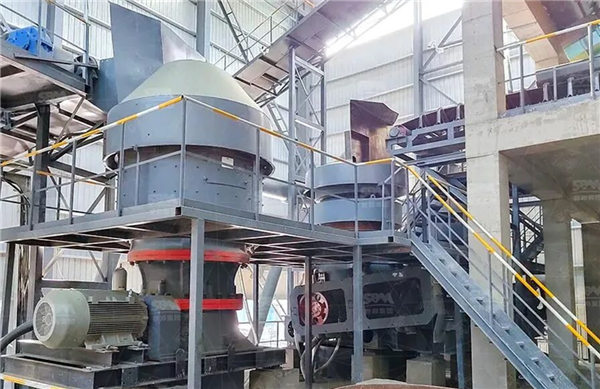
With excellent production efficiency and processing capacity, cone crushers perfectly meet the mass production demands of secondary and fine crushing. They feature large feeding capacity and reasonable crushing ratio, capable of receiving bulk materials discharged from jaw primary crushers and accurately controlling discharge particle size. The adjustable discharge range is flexible, enabling production of finished materials with specifications from 10mm to 30mm as required. One single machine is applicable to both secondary crushing and tertiary fine crushing, which simplifies production line layout without extra equipment replacement.
In terms of operational stability and failure rate, cone crushers boast compact structure and mature transmission system, equipped with overload protection devices. They can automatically retreat when encountering uncrushable impurities, effectively preventing equipment jamming and body damage, and greatly reducing downtime and maintenance frequency. The equipment operates with low vibration and noise, and is equipped with sound sealing and dustproof structures to minimize on-site dust emission, complying with environmental protection production standards. It is ideal for long-term uninterrupted continuous production in open-pit mines and large stone plants.
From the perspective of long-term operation costs, cone crushers feature low energy consumption, long replacement cycle of wearing parts, low overall failure rate and simple later maintenance, leading to lower comprehensive production costs. Compared with impact crushers which have high consumption of vulnerable parts and limited application to soft materials, cone crushers deliver higher output, less consumable loss and faster investment return in large-scale secondary and fine crushing processing of high-hardness stones.
- Which Crusher is Best for Processing Aggregates?
- What equipment is used for basalt gravel production?
- What equipment is used for producing coarse sand?
- What are the complete stone crushing plant equipments?How much is a complete crushing production line?
- What are the types of granite sand making machines?
- How many tons of stone can a cone crusher process per day?